

A patient in Scottsdale, Arizona, spent close to $3,000 on drugstore whitening kits and temporary bonding kits over four years trying to hide a chipped front tooth and a stubborn gray stain. She finally booked a consultation at a cosmetic dentist’s office and left with a $1,450 porcelain veneer that solved both problems in two visits. Her story is common. Most people try to patch a smile problem themselves before learning that cosmetic dentistry has a permanent, cost-effective fix waiting on the other side of one consultation.
Direct Answer
Cosmetic dentistry can correct stained teeth, chipped or cracked teeth, gaps, crooked teeth, worn enamel, a gummy smile, missing teeth, uneven teeth, undersized teeth, and outdated dental work. Treatments include veneers, crowns, bonding, whitening, gum contouring, and clear aligners, with single-tooth fixes typically costing $300 to $2,500 and full smile makeovers running $8,000 to $30,000. A cosmetic dentist evaluates each problem individually and recommends the least invasive treatment that will hold up long-term.
Executive Summary
- Ten smile problems have dedicated fixes. Stains, chips, gaps, crookedness, wear, gumminess, missing teeth, unevenness, small teeth, and old dental work each respond to a specific cosmetic dental treatment.
- Cost depends on the treatment, not just the problem. Composite bonding starts around $300 per tooth, while porcelain veneers and crowns range from $900 to $2,500 per tooth.
- Delaying treatment usually raises the final bill. A chip or crack left untreated can progress into a root canal and crown, turning a $500 fix into a $2,500 one.
- Not every fix is purely cosmetic. Crowns, gum contouring, and orthodontic work often restore function and can qualify for partial insurance or HSA coverage.
- A comparison consultation matters more than a single treatment name. Essentials Dental evaluates the whole smile before recommending veneers, bonding, or crowns for any single tooth.
- Full smile makeovers are staged, not one appointment. Most patients complete treatment across two to six visits,s depending on how many teeth are involved.
What Smile Problems Does Cosmetic Dentistry Treat?
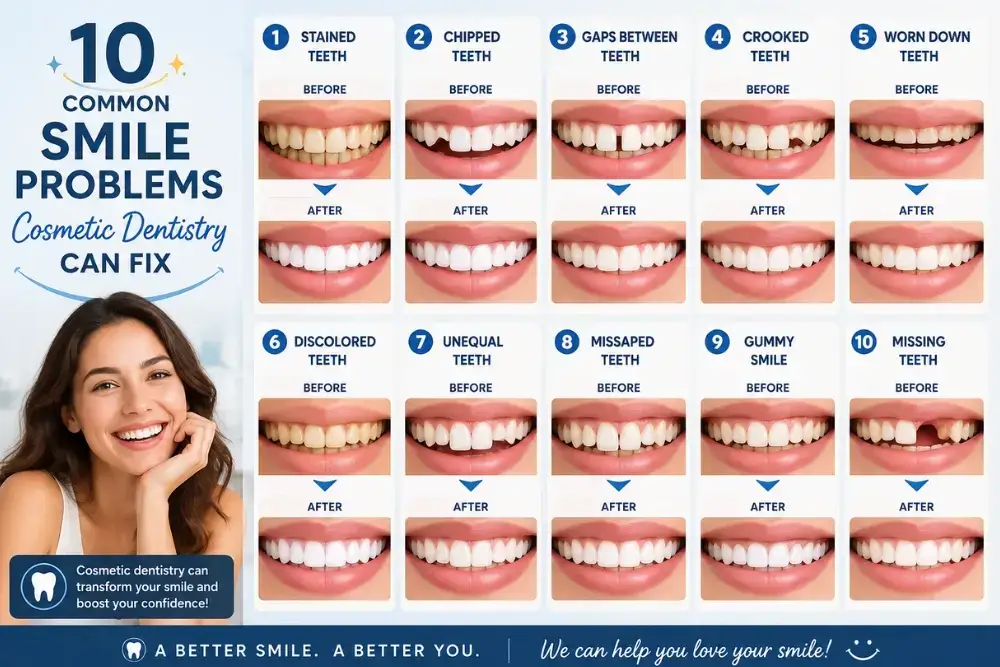
Cosmetic dentistry covers a wide range of concerns, from a single chipped tooth to a full smile reconstruction. However, most patient cases fall into ten recurring categories. Understanding which category applies to a specific smile makes the consultation faster and the treatment plan more accurate.
1. Stained or Discolored Teeth
Coffee, wine, tobacco, and certain medications cause surface and deep stains that regular brushing cannot remove. Professional whitening lifts surface stains within one or two office visits. Veneers cover deeper, intrinsic stains that whitening cannot touch, such as those caused by tetracycline exposure in childhood.
2. Chipped or Cracked Teeth
A chip usually happens from biting something hard, grinding, or an accidental impact. Composite bonding repairs small chips in a single visit for $300 to $600 per tooth. Larger cracks that reach the tooth’s inner structure typically need a crown to prevent the crack from spreading.
3. Gaps Between Teeth
Gaps, also called diastema, occur naturally or from tooth movement over time. Bonding or veneers close small gaps without orthodontics. Wider gaps or gaps caused by bite misalignment usually respond better to clear aligners such as Invisalign.
4. Crooked or Misaligned Teeth
Mild crowding or rotation can sometimes be masked with veneers, which reshape how a tooth appears without moving it. Moderate to severe misalignment needs actual tooth movement through clear aligners or traditional braces before any cosmetic work is added.
5. Worn Down Teeth
Years of grinding, acidic foods, or an uneven bite wear down enamel and shorten teeth. Bonding rebuilds minor wear. Crowns or veneers restore length and function when the wear is significant enough to affect the bite.
6. Gummy Smile
A gummy smile happens when excess gum tissue covers too much of the tooth surface, making teeth look short. Gum contouring, sometimes called crown lengthening, reshapes the gum line in a single outpatient procedure and is often paired with veneers for a complete result.
7. Missing Teeth
A missing tooth affects appearance, bite function, and the position of neighboring teeth over time. Dental implants are the most durable replacement, fusing to the jawbone and lasting decades with proper care. Bridges and partial dentures remain lower-cost alternatives.
8. Uneven or Asymmetrical Teeth
Teeth that differ noticeably in size, shape, or edge alignment create an uneven smile line. Veneers or reshaping, known as enameloplasty, correct minor asymmetry by adjusting the visible surface of each affected tooth.
9. Small or Undersized Teeth
Naturally small teeth, sometimes called peg laterals, leave visible gaps and an unbalanced smile. Veneers or bonding add width and length to bring undersized teeth into proportion with the rest of the smile.
10. Old, Visible Dental Work
Metal fillings and older crowns darken and stand out against natural enamel over time. Tooth-colored composite fillings and porcelain crowns replace outdated restorations with materials that blend into the surrounding teeth.
Which Cosmetic Dental Treatment Works Best for Each Problem?
Choosing the right treatment comes down to how severe the problem is and how long the patient wants the results to last. As a result, the same smile problem often has more than one valid solution depending on budget and timeline. The table below compares the most common treatments side by side.
| Treatment | Best For | Average Cost | Typical Longevity |
| Composite Bonding | Small chips, minor gaps, minor discoloration | $300–$600 per tooth | 3–7 years |
| Professional Whitening | Surface stains from food, drink, and tobacco | $400–$800 per session | 6 months–2 years |
| Porcelain Veneers | Stains, chips, gaps, uneven shape | $900–$2,500 per tooth | 10–20 years |
| Dental Crowns | Cracked, worn, or structurally weak teeth | $1,000–$1,500 per tooth | 10–15 years |
| Clear Aligners | Crooked teeth, wider gaps, bite issues | $3,000–$8,000 total | Permanent with retainer use |
| Gum Contouring | Gummy smile, uneven gum line | $500–$3,000 total | Permanent |
| Dental Implants | One or more missing teeth | $3,000–$5,000 per tooth | 20+ years |
A Second Case: Why Waiting Costs More
A patient in Ohio chipped a molar and decided to wait, assuming it was purely cosmetic and not urgent. Eighteen months later, the crack had spread beneath the gumline, and the tooth needed a root canal followed by a crown. What would have been a $500 bonding repair became a $2,800 treatment plan. This is where delayed cosmetic issues get costly. A crack that looks minor on the surface can expose the tooth’s inner structure to bacteria, turning an appearance problem into a health problem with a much larger bill attached.
Myth vs Fact
| Myth | Fact |
| Veneers ruin your natural teeth | Porcelain veneers require minimal enamel removal, and no-prep options preserve nearly all natural tooth structure |
| Whitening works on every type of stain | Whitening only affects surface stains; deep intrinsic stains and existing crowns or fillings require veneers or bonding instead |
| Cosmetic dentistry is only about looks | Crowns, gum contouring, and bite correction frequently restore chewing function alongside appearance |
| Insurance never covers cosmetic treatment | Insurance may cover part of a crown or veneer when the tooth was damaged by injury or decay, rather than purely for aesthetics |
| Results last forever once treatment is done | Veneers and crowns typically need replacement after 10 to 20 years, depending on the material and care |
| Smile makeovers are too expensive for most budgets | Treatment can be staged tooth by tooth, and many practices, including Essentials Dental, offer financing plans |
Decision Guide
| Situation | Recommendation | Why |
| Single chipped front tooth | Composite bonding | Fast, affordable, completed in one visit |
| Multiple-stained teeth resistant to whitening | Veneers | Covers deep stains that whitening cannot remove |
| One or more missing teeth | Dental implants | Longest-lasting option that also protects jawbone density |
| Gummy smile with otherwise healthy teeth | Gum contouring | Reshapes the gum line without touching healthy enamel |
| Mild crowding, no bite issues | Veneers | Masks minor misalignment without orthodontic time |
| Moderate to severe misalignment | Clear aligners first, cosmetic work after | Straightening teeth first protects the investment in veneers or bonding |
The Bottom Line
A smile problem that seems purely cosmetic can turn into a larger dental health issue if it sits untreated for too long, as the chipped molar example above shows. Fixing stains, chips, gaps, or missing teeth early protects both the smile and the budget. Essentials Dental evaluates each of the ten smile problems individually and builds a treatment plan around what will actually last, not just what looks good in the first six months.
Schedule a free consultation at essentialsdental.com.
FAQs
How much does a full smile makeover cost?
A full smile makeover typically costs $8,000 to $30,000, depending on how many teeth are treated and which materials are used. Essentials Dental builds a staged treatment plan so patients can spread costs across multiple visits rather than paying the full amount upfront.
Can cosmetic dentistry fix a chipped tooth without a crown?
Yes, small to moderate chips are usually repaired with composite bonding in a single appointment. Larger chips that expose the inner tooth structure need a crown to prevent the crack from spreading further.
Do veneers look natural?
Modern porcelain veneers are custom-shaded to match surrounding teeth and mimic natural translucency, so they generally look indistinguishable from real enamel. A consultation includes a shade match and, at many offices, a digital preview before any tooth preparation begins.
Is teeth whitening safe for sensitive teeth?
Professional whitening performed by a licensed dentist is generally safe for sensitive teeth because the concentration and application time are controlled, unlike over-the-counter kits. Patients with existing sensitivity should mention it during their consultation so the treatment can be adjusted.
What is the difference between a veneer and a crown?
A veneer covers only the front surface of a tooth, while a crown encases the entire visible tooth. Veneers suit teeth with cosmetic concerns and intact structure, while crowns suit teeth that are cracked, weakened, or heavily filled. See our dental crowns page for a full breakdown of when each option applies.
Does insurance cover any part of cosmetic dentistry?
Standard dental insurance rarely covers procedures done purely for appearance, but it may cover part of a crown, filling, or implant when the underlying cause is decay, injury, or a structural problem. Essentials Dental can review a treatment plan against insurance benefits before work begins.


