

Most dental crowns last 10 to 15 years on average, though the real answer to how long dental crowns last depends on the material, where the crown sits in your mouth, and how well you care for it. Some crowns wear out closer to the five-year mark, while others, especially those made from stronger materials, stay in excellent shape for 20 years or more. In short, a crown is a long-lasting restoration, but it is not a permanent one.
If you are about to get a crown, or you already have one and are wondering whether it is due for a replacement, this guide walks through exactly what to expect, how long a crown lasts by material type, what shortens or extends its life, and the warning signs that it may be time to see your dentist. If you would like to explore your options in person, our dental crown services at Essentials Dental are a great place to start.
What Is a Dental Crown, and Why Does Lifespan Vary?
A dental crown is a custom-made “cap” that fits over a damaged, weakened, or heavily restored tooth to rebuild its shape, strength, and appearance. Crowns are commonly used after a large filling, a fracture, root canal treatment, or significant decay, and they are also used to complete dental implants and support bridges.
Because a crown takes on the everyday job of a natural tooth, its lifespan reflects everything that tooth goes through: chewing forces, temperature changes, grinding, and the wear of daily use. That is why two people can get the same type of crown and see very different results. The material matters, but so does the mouth it lives in.
How Long Do Dental Crowns Last on Average?
On average, dental crowns last between 10 and 15 years, and many remain functional well beyond that with good care. Long-term clinical research backs this up: studies tracking crowns over time show that roughly 90% or more are still working well at the five-year mark, and a large share are still going strong at 10 and 15 years.
So when patients ask how long a crown should last, a reasonable expectation is that a quality crown, placed by an experienced dentist and cared for properly, should give you well over a decade of service, and often much longer. Thinking of it as a 10-to-15-year restoration, rather than a one-time permanent fix, helps you plan and budget realistically.
Dental Crown Lifespan by Material
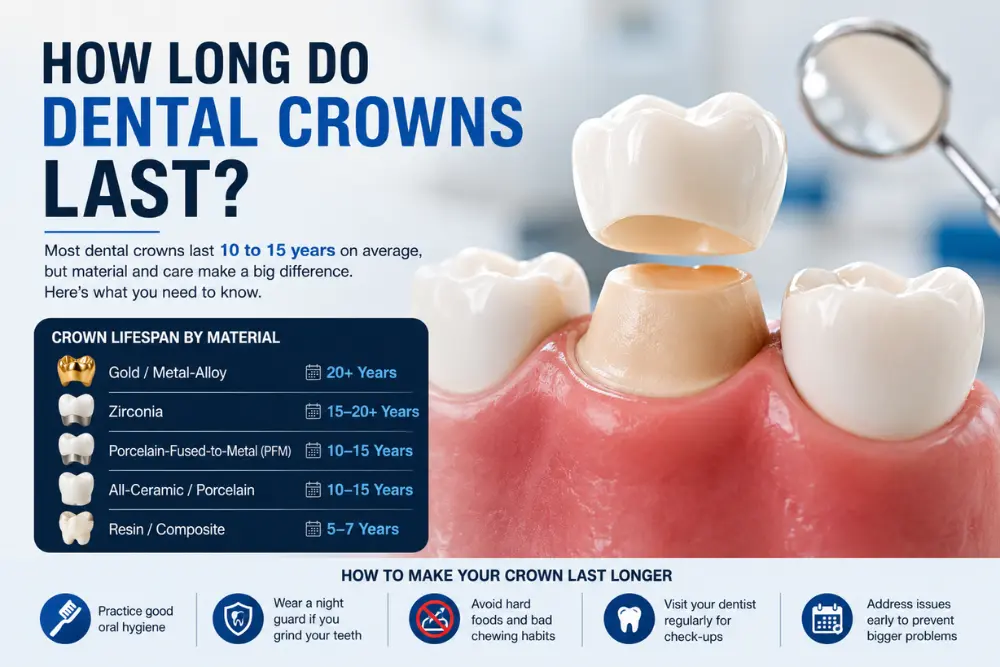
One of the biggest factors in how long crowns last is what they are made of. Here is a general breakdown of dental crown life expectancy by material:
- Gold and metal-alloy crowns: Frequently exceed 20 years and often last for decades. A gold crown is among the most durable options available because gold is gentle on opposing teeth and highly resistant to chipping and fracture. Its main trade-off is appearance, so it is usually reserved for back molars where strength matters most and visibility is low.
- Zirconia crowns: Often last 15 to 20-plus years thanks to their exceptional strength, while still offering a tooth-colored look. This makes them a popular modern choice for both front and back teeth.
- Porcelain-fused-to-metal (PFM) crowns: Typically last 10 to 15 years. They balance durability with a natural appearance, though a thin metal line may become visible near the gumline over time.
- All-ceramic and all-porcelain crowns: Usually last 10 to 15 years and provide the most natural, translucent look, which makes them ideal for front teeth. They are slightly less durable than metal or zirconia under heavy chewing pressure.
- Resin or composite crowns: Have the shortest lifespan, often around 5 to 7 years. They are the most economical but wear down and fracture more easily than other materials.
What Affects How Long a Crown Lasts?
Material sets the ceiling, but your daily habits decide how close you get to it. Several factors influence how long a crown lasts in real-world conditions:
Oral hygiene. Brushing twice a day, flossing, and keeping up with professional cleanings prevent decay at the crown’s margin, where the crown meets your natural tooth. Decay in that spot is one of the most common reasons a crown fails early, even when the crown itself is intact.
Location in the mouth. Crowns on back molars absorb far more force from chewing and grinding than crowns on front teeth, so they tend to wear faster.
Teeth grinding and clenching (bruxism). Grinding puts intense, repeated stress on a crown and can cause cracks or premature wear. If you grind your teeth, a custom night guard is one of the best investments you can make in your crown’s longevity.
Diet and habits. Chewing ice, biting pens, opening packaging with your teeth, or eating very hard and sticky foods all shorten a crown’s life.
Fit and placement. A crown that is precisely fitted and bonded by an experienced dentist seals out bacteria and distributes bite force evenly, which meaningfully extends its lifespan.
Health of the underlying tooth. A tooth that has had a root canal can become more brittle over time, which can modestly affect crown lifespan, though the crown itself plays a protective role by shielding that tooth from fracture.
Signs Your Dental Crown May Need to Be Replaced
A crown rarely fails overnight. Watch for these warning signs that it may be nearing the end of its life:
- Persistent tooth sensitivity or pain around the crowned tooth
- Visible cracks, chips, or wear on the crown surface
- A crown that feels loose or shifts slightly when you chew
- Gum recession or a dark line appearing at the crown’s edge
- Decay developing at the margin where the crown meets the tooth
- A crown that looks worn down or no longer matches your bite
If you notice any of these, it is worth scheduling a checkup. Catching a problem early often means a simpler, less costly fix. Sudden pain, a crown that comes off, or a cracked tooth can also count as a dental emergency, so do not wait it out.
How to Make Your Dental Crown Last Longer
The good news is that most of what determines how long a crown lasts is within your control. To get the most years out of your restoration:
- Brush twice daily with a soft-bristled toothbrush and floss around the crown every day.
- Keep up with regular dental checkups and professional cleanings so your dentist can monitor the crown and the tooth beneath it.
- Wear a night guard if you grind or clench your teeth.
- Avoid chewing ice, hard candy, and non-food objects, and be mindful with very sticky foods.
- Address small issues, like sensitivity or a rough edge, before they become bigger problems.
According to the American Dental Association, consistent home care and routine professional visits are key to protecting restorations like crowns and helping them last as long as possible.
What Happens When a Crown Needs Replacing?
When a crown does reach the end of its lifespan, replacing it is usually a straightforward process. Your dentist removes the old crown, evaluates the tooth underneath, addresses any decay or damage, and fits a new crown, often using an updated material or an improved impression for a better long-term result.
Because crowns protect and preserve your natural tooth structure, keeping up with replacements when needed is an important part of long-term oral health. You can read more about how these restorations protect your teeth in our guide on the role of dental crowns in restorative dentistry.
Final Thoughts
So, how long do dental crowns last? For most people, the honest answer is 10 to 15 years, with plenty of crowns lasting 20 years or longer when they are made from durable materials and cared for well. Material choice sets your starting point, but daily habits, grinding protection, and regular dental visits are what carry a crown to the high end of its lifespan.
If you have a crown that is aging, a tooth that may need one, or you simply want a professional opinion on your options, our team at Essentials Dental is here to help. Meet our doctors, learn about the advanced technology we use for precise, long-lasting restorations, or book an appointment at our Glendale Heights office. Have a question before your visit? Feel free to contact us directly.
Frequently Asked Questions
How long do dental crowns last on average?
Most dental crowns last 10 to 15 years on average. With good oral hygiene, regular dental checkups, and durable materials, many crowns last 20 years or more.
How long does a gold crown last?
A gold crown is one of the most durable options available and frequently lasts more than 20 years, sometimes for decades. Gold is strong, gentle on opposing teeth, and highly resistant to chipping, which is why it is often used on back molars.
How long should a crown last before it needs replacing?
A quality crown placed by an experienced dentist should generally last at least 10 to 15 years before replacement. Some last much longer, while resin or composite crowns tend to wear out sooner, often around 5 to 7 years.
What shortens the lifespan of a dental crown?
Poor oral hygiene, teeth grinding, chewing hard objects like ice, decay at the crown’s margin, and heavy chewing forces on back teeth can all shorten how long a crown lasts. A night guard and consistent home care help counteract these factors.
How do I know if my crown needs to be replaced?
Signs include lingering sensitivity or pain, visible cracks or wear, a loose crown, gum recession or a dark line at the edge, or decay at the margin. If you notice any of these, schedule a dental checkup so the issue can be assessed early.


