

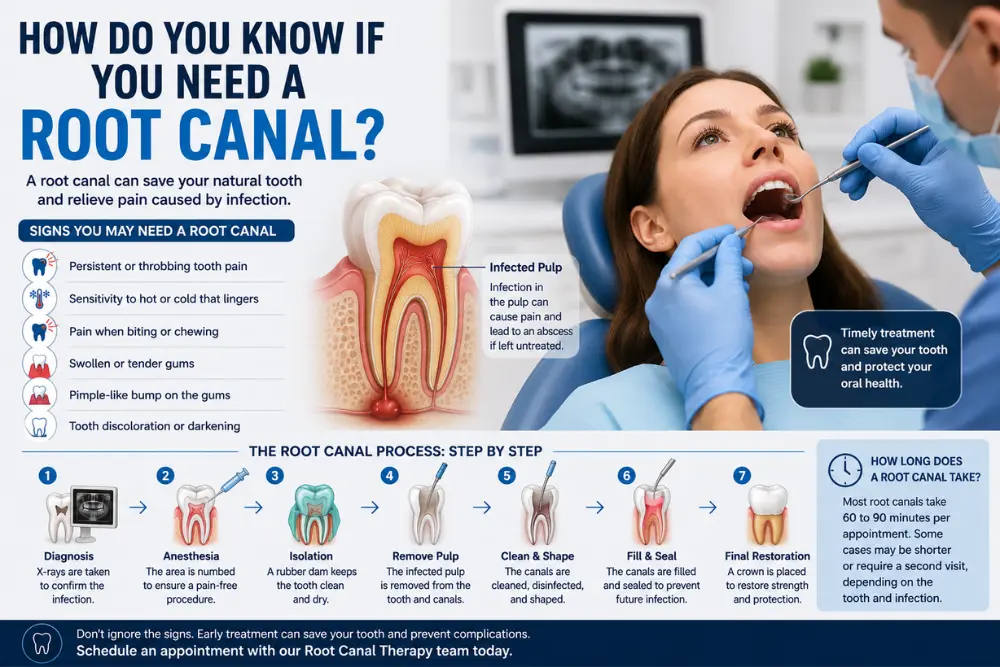
You may need a root canal when the soft tissue inside your tooth, called the pulp, becomes infected or inflamed, usually because of deep decay, a crack, or an injury. The most common warning signs are persistent tooth pain, lingering sensitivity to hot or cold, pain when biting down, swollen or tender gums, a small pimple-like bump on the gums, or a tooth that has darkened in color.
That said, only a dentist can confirm whether you truly need treatment, since some of these symptoms overlap with other dental issues.
If you have been dealing with a nagging toothache and wondering, “How do you know if you need a root canal, this guide covers the signs to watch for, what causes the problem, the root canal procedure step by step, how long a root canal takes, and what recovery looks like. If your pain is severe or worsening, do not wait. Our root canal therapy team can help you get relief quickly.
What Is a Root Canal?
A root canal is a dental treatment that removes infected or inflamed pulp from inside a tooth, cleans and disinfects the space, and then seals it to prevent further infection. The goal is simple but important: save your natural tooth and relieve your pain, rather than removing the tooth entirely.
Root canals are extremely common. More than 15 million are performed in the United States each year, and they are routinely done by general dentists as well as endodontists, who are specialists with additional training in this exact type of treatment. Despite their reputation, modern root canals are far more comfortable than the horror stories suggest.
How Do You Know If You Need a Root Canal? Signs to Watch For
Recognizing the signs you need a root canal early can save your tooth and spare you a lot of discomfort. Here is how you can tell if you need a root canal, based on the symptoms dentists see most often:
- Persistent or throbbing tooth pain that does not go away or that returns repeatedly, especially pain deep in the tooth or that radiates to the jaw.
- Lingering sensitivity to hot or cold that continues for several seconds or longer after the food or drink is gone.
- Pain when biting or chewing, or tenderness when pressure is applied to a specific tooth.
- Swollen, tender, or reddened gums near the affected tooth.
- A pimple-like bump on the gums (a gum boil or abscess), which may release pus and often signals infection.
- Tooth discoloration or darkening, which can indicate that the pulp inside the tooth is dying.
- A cracked, chipped, or broken tooth, which can expose the pulp to bacteria.
- Deep decay or a loose feeling in a tooth that has been bothering you.
If you are trying to figure out how you can tell if you need a root canal on your own. Remember that pain intensity varies from mild to severe and can come and go. Because these symptoms overlap with other conditions, a proper exam and X-rays are the only way to know for sure. Our 5 signs you might need a root canal guide breaks these warning signs down in even more detail.
What Causes the Need for a Root Canal?
A root canal becomes necessary when bacteria reach the pulp, the network of nerves and blood vessels at the center of your tooth. The most common causes include:
- Deep cavities that penetrate through the enamel and dentin into the pulp
- Cracks or fractures in the tooth from injury, grinding, or biting something hard
- Trauma to the tooth, which can damage the pulp even without a visible crack
- Repeated dental procedures on the same tooth over time
- A large or failing filling that allows bacteria back in
Left untreated, the infection can spread beyond the tooth’s roots, leading to an abscess, bone loss, and eventually the loss of the tooth itself, which is exactly what a root canal is designed to prevent.
The Root Canal Procedure, Step by Step
Understanding the tooth root canal process can ease a lot of anxiety, because knowing what happens removes the fear of the unknown. Here is what a typical root canal procedure looks like from start to finish:
Step 1—Diagnosis and X-rays. Your dentist examines the tooth and takes X-rays to confirm the infection and see the shape of the root canals.
Step 2—Anesthesia. The area is fully numbed with local anesthesia, so you should feel no pain during the procedure, similar to getting a filling.
Step 3—Isolating the tooth. A small protective sheet called a rubber dam is placed around the tooth to keep it clean and dry.
Step 4—Removing the infected pulp. Your dentist creates a small opening in the top of the tooth and carefully removes the diseased pulp from the inner chamber and canals.
Step 5—Cleaning and shaping. The empty canals are cleaned, disinfected, and shaped to prepare them for filling.
Step 6—Filling and sealing. The canals are filled with a biocompatible material called gutta-percha and sealed, then the tooth is closed with a temporary or permanent filling.
Step 7—Final restoration. In most cases, a dental crown is placed over the tooth at a follow-up visit to restore its strength and protect it from future damage.
How Long Does a Root Canal Take?
Most patients want to know how long a root canal takes before they commit to treatment. A straightforward root canal typically takes about 60 to 90 minutes per appointment, though simpler cases can be finished in as little as 30 minutes, and more complex teeth, such as molars with multiple canals, can take up to a few hours.
Some root canals are completed in a single visit, while others require two, especially if the infection is significant or a crown needs to be prepared and placed at a later appointment. The exact time depends on which tooth is involved, how many canals it has, and the severity of the infection.
Does a Root Canal Hurt?
This is one of the most common concerns, and the reassuring answer is that a root canal is not more painful than a routine filling. Because the tooth and surrounding tissue are fully numbed with local anesthesia, the procedure itself is comfortable for most people.
In fact, a root canal relieves the pain caused by the infection, so many patients feel significantly better afterward. Mild soreness for a few days following treatment is normal and is easily managed with over-the-counter pain relievers.
Recovery After a Root Canal
Recovery from a root canal is usually quick and uncomplicated. Most people return to their normal routine the next day, and any tenderness typically fades within a few days to about a week. To support healing, it helps to:
- Stick to softer foods for a day or two, especially before the permanent restoration is placed
- Avoid chewing directly on the treated tooth until it is fully restored
- Keep up with gentle brushing and flossing
- Take pain relievers as directed if you have any soreness
- Return for your follow-up visit to have the permanent crown or filling placed
With proper care and a protective crown, a tooth treated with a root canal can last a lifetime.
Root Canal vs. Extraction: Why Saving the Tooth Matters
When a tooth is badly infected, the two main options are a root canal to save it or an extraction to remove it. Whenever possible, dentists recommend saving the natural tooth. Removing a tooth means it later needs to be replaced with an implant or bridge to restore chewing and keep neighboring teeth from shifting, and those replacements typically cost more than a root canal and crown combined. Keeping your natural tooth is almost always the healthier, more economical long-term choice.
Final Thoughts
So, how do you know if you need a root canal? Watch for persistent pain, lingering temperature sensitivity, pain when biting, swollen gums, a gum bump, or a darkening tooth, and see a dentist promptly if any of these show up. Dental infections do not resolve on their own, and the sooner you are seen, the better your outcome and the more comfortable your treatment.
If you recognize any of the signs above, our team at Essentials Dental is experienced in diagnosing and treating root canal infections quickly and comfortably. Meet our doctors, explore our root canal therapy services, or book an appointment at our Glendale Heights office. If you are in pain right now, our emergency dental services are here for you; just contact us to get started.
Frequently Asked Questions
How do you know if you need a root canal?
You may need a root canal if you have persistent or throbbing tooth pain, lingering sensitivity to hot or cold, pain when biting, swollen or tender gums, a pimple-like bump on the gums, or a darkening tooth. Only a dentist can confirm it with an exam and X-rays.
How long does a root canal take?
Most root canals take about 60 to 90 minutes per appointment. Simple cases can be shorter, while complex teeth with multiple canals may take longer or require a second visit.
Is a root canal painful?
No. Because the tooth is fully numbed with local anesthesia, a root canal is generally no more painful than getting a filling. It actually relieves the pain caused by the infection, though mild soreness for a few days afterward is normal.
What happens if you wait too long to get a root canal?
Delaying treatment allows the infection to spread beyond the tooth’s roots, which can cause an abscess, bone loss, and eventually loss of the tooth. Seeing a dentist early leads to a simpler procedure and a better outcome.
Do you always need a crown after a root canal?
In most cases, yes. A dental crown is placed over the treated tooth to restore its strength and protect it from fracture, especially for back teeth that handle heavy chewing forces.


