

Quick answer
A timely root canal saves an infected or damaged tooth, ends the pain, and stops the infection from spreading. Acting early usually means an easier procedure, faster healing, and keeping your natural tooth instead of losing it.
Overview
This guide explains why a timely root canal is worth considering, the warning signs that you may need one, and what the treatment actually does. It is written for patients of Essentials Dental who want to protect a painful or infected tooth before the problem grows.
Key takeaways
- A root canal removes infected or damaged pulp from inside a tooth, then cleans and seals it.
- Treating it early saves the natural tooth and keeps the infection from spreading.
- Common signs include lingering pain, sensitivity to hot and cold, swelling, and a pimple-like bump on the gums.
- The procedure is designed to relieve pain, not cause it.
- Waiting often turns a straightforward root canal into an extraction and a more involved replacement.
Most people meet the words “root canal” with a wince, expecting the worst. The reality is nearly the opposite. A root canal is the treatment that rescues a tooth already in trouble, and the sooner it happens, the simpler it tends to be. If a tooth has been aching, throbbing at night, or flinching at every sip of coffee, that tooth is asking for attention. Here is why a timely root canal is worth serious consideration and how to recognize when you need one.
What is a root canal, and when is it needed?
Inside every tooth is a soft core called the pulp, made up of nerves and blood vessels. When decay reaches it, or a crack or injury lets bacteria in, the pulp becomes inflamed or infected. A root canal clears out that infected tissue, disinfects the inside of the tooth, and seals it so bacteria cannot return. The tooth stays in place and keeps doing its job.
A dentist usually recommends the treatment once a tooth shows signs of pulp infection or nerve damage that will not heal on its own. Left alone, that infection does not resolve. It spreads.
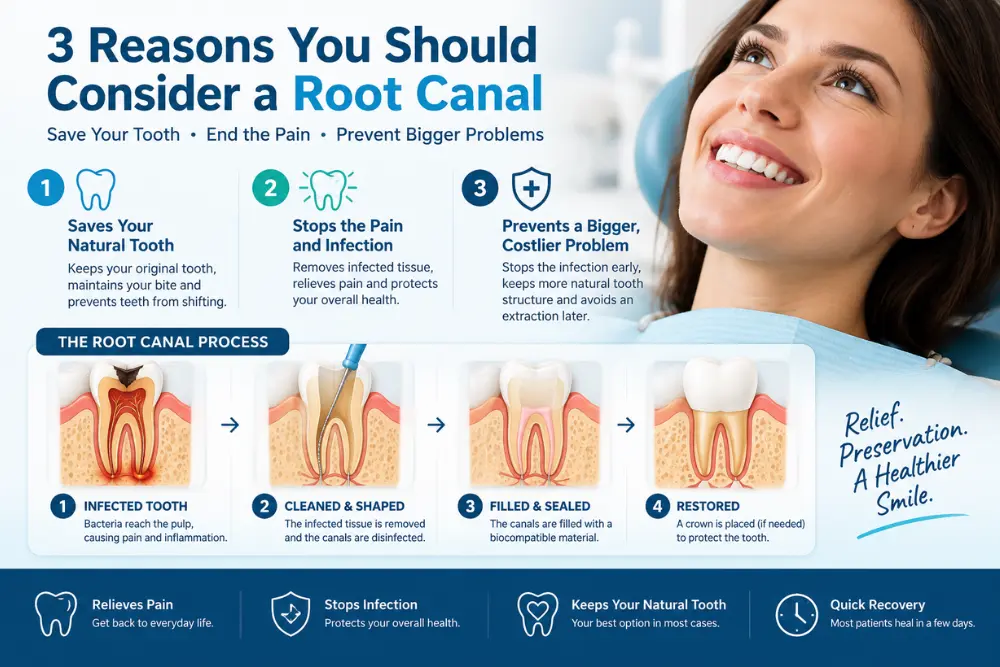
Reason one: it saves your natural tooth.
Nothing your dentist can fit will ever match the tooth you were born with. Your own tooth carries your natural bite, keeps neighboring teeth from drifting, and preserves the bone around the root. A root canal is the treatment that lets you keep it. Once a tooth is pulled, you move into the world of implants, bridges, and gaps, all of which ask more of your time and your wallet than saving the tooth would have. Keeping the original is almost always the better outcome.
Reason two: it stops the pain and the infection.
The ache from an infected tooth is not something to outlast. That pain is the nerve telling you the pulp is inflamed, and the infection behind it can travel into the jaw, the surrounding bone, and beyond. A root canal removes the infected tissue at the source, which is why the treatment relieves pain rather than causing it. Clearing the infection protects not just the tooth but your wider health, and it puts an end to nights spent staring at the ceiling.
Reason three: it prevents a bigger, costlier problem later.
An infected tooth caught early is a contained problem. The same tooth ignored for months becomes a spreading one, with a real risk of an abscess, bone loss, and losing the tooth altogether. Early treatment is easier to carry out, heals faster, and preserves more of your natural tooth structure. Waiting rarely makes the situation cheaper or simpler. It usually does the reverse, trading a single appointment for an extraction and a replacement down the line.
How do you know if you need a root canal?
Teeth have a limited vocabulary, so they repeat the same signals. Watch for:
- Persistent, throbbing pain that lingers rather than passing, often worse at night.
- Sharp pain when you bite down or put pressure on a particular tooth.
- Sensitivity to hot or cold that keeps aching long after the food or drink is gone.
- Swollen, red, or tender gums near the tooth.
- A small pimple-like bump on the gum, which may drain and ease the pain without fixing the cause.
- A tooth that has darkened or grayed compared with its neighbors.
One symptom on its own does not confirm anything, and some fade only to return. That is exactly why a professional exam matters. If any of these sound familiar, book a visit rather than waiting to see whether it settles.
Does a root canal hurt?
This is the fear that keeps people in pain longer than they need to be. A modern root canal is carried out under local anesthetic, and for most patients it feels much like having a filling. The discomfort people dread is the infection itself, and the treatment is what takes that away. Mild soreness for a day or two afterward is normal and manageable. The relief that follows is the part worth remembering.
Considering a root canal is really considering whether to keep your own tooth, end the pain, and head off a larger problem. On all three counts, acting sooner serves you better than waiting.
The Glendale Heights Office Solution to Your Infected Tooth
A tooth that aches at night or reacts to hot coffee is sending a specific signal. The pulp inside it is inflamed or infected, and that infection doesn’t sit still. It spreads into the bone and the tissue around it. At Essentials Dental in Glendale Heights, patients who come in early almost always leave with the tooth still in their mouth. The ones who wait usually trade a single appointment for an extraction, an implant consultation, and a longer recovery. A root canal clears the infected tissue, seals the tooth, and stops the pain at its source. It’s not the procedure people dread. It’s the one that ends the dread.
Frequently asked questions
What is a root canal for?
It treats a tooth whose inner pulp has become infected or damaged, usually from deep decay, a crack, or injury. The procedure removes the infection, then cleans and seals the tooth so it can stay in place.
How do I know if I need a root canal?
Lingering tooth pain, sensitivity to hot and cold that does not fade, swelling, a bump on the gum, or a darkening tooth are common signs. A dentist confirms it with an exam and an X-ray.
When is root canal treatment required?
When the pulp inside a tooth is inflamed or infected and will not heal on its own. At that point, the choice is usually a root canal to save the tooth or an extraction to remove it.
Is it better to get a root canal or pull the tooth?
Saving the natural tooth is almost always preferable. An extraction leaves a gap that affects your bite and needs its own replacement, which asks more of you over time.
Does getting a root canal hurt?
The treatment is done under local anesthetic and feels similar to a filling for most people. It is designed to relieve the pain of the infection, with only mild soreness expected afterward.


