

If you’ve just had a root canal or one is coming up on your calendar, you’re probably wondering what happens next. The procedure itself has a reputation that’s far worse than reality, but the bigger question most patients have is about what comes after. Understanding root canal recovery ahead of time helps you heal faster, avoid unnecessary worry, and know when something actually needs your dentist’s attention.
At Essentials Dental, with offices in Glendale Heights and Lombard, our team performs root canal therapy regularly and walks every patient through exactly what to expect afterward. Here’s a complete look at the root canal healing process, from the first few hours to full recovery.
What Happens Right After Treatment
Once the procedure is complete, your tooth and the surrounding gum tissue will likely still be numb from the local anesthesia for a few hours. This is normal, and it’s a good idea to avoid eating until the numbness fully wears off so you don’t accidentally bite your cheek or tongue.
Mild soreness, tenderness when chewing, and slight inflammation around the treated tooth are all expected in the first day or two. This is your body responding to the procedure, not a sign that something went wrong.
Root Canal Recovery Timeline
Every patient heals a little differently, but here’s a general root canal recovery timeline you can expect:
Day 1–2: Numbness fades within a few hours. Mild to moderate discomfort and sensitivity around the treated tooth are common. Over-the-counter pain relief usually keeps this manageable.
Day 3–5: Most patients notice swelling and tenderness starting to subside. Chewing on the treated side may still feel a bit sensitive, but sharp pain should be easing.
Day 7–10: Discomfort is typically minimal to none by this point. If a permanent crown or filling hasn’t been placed yet, this is usually when that follow-up appointment happens.
2 weeks and beyond: The tooth should feel essentially normal for daily use. Full internal healing of the bone and tissue around the root can continue for several months, even though you won’t feel it.
If pain is worsening rather than improving after the first few days, that’s outside the typical root canal recovery time and worth a call to your dentist.
Root Canal Side Effects to Expect
Some discomfort is a normal part of healing, but it helps to know the difference between expected root canal side effects and warning signs.
Expected:
- Mild to moderate soreness for a few days
- Tenderness when biting down or chewing
- Slight swelling of the gum near the treated tooth
- Minor sensitivity to temperature for a short period
Not normal, contact your dentist.
- Severe pain that worsens after day 2 or 3
- Visible swelling in the face, cheek, or jaw
- A return of throbbing pain after it had started to improve
- Fever
- An unusual or bad taste, or pus near the treated tooth
- The temporary filling or crown falling out
Catching these early matters. If something feels off, don’t wait it out. Call your dental office and describe your symptoms.
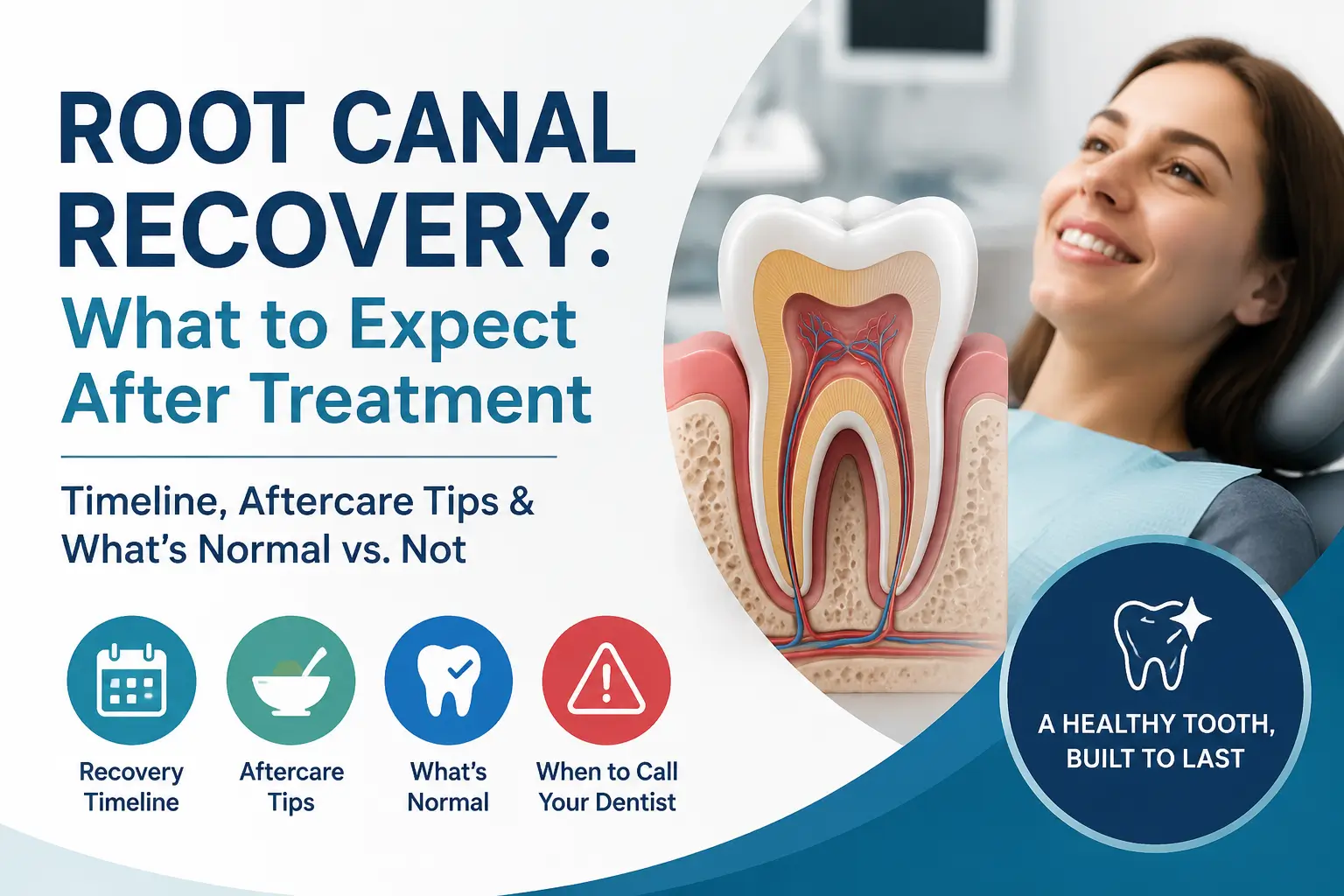
Root Canal Aftercare: Tips for a Smooth Recovery
Good root canal aftercare in the first week sets the tone for how smoothly the rest of your healing goes. Here are the essentials:
1. Manage Discomfort the Right Way
Over-the-counter pain relievers like ibuprofen or acetaminophen are usually enough to manage soreness. Your dentist may recommend a specific dosage or combination depending on your case. Avoid aspirin if you’re prone to bleeding, since it can thin the blood.
2. Watch What You Eat
Stick to soft foods like yogurt, mashed potatoes, scrambled eggs, and soup for the first couple of days. Avoid chewing directly on the treated tooth until your dentist confirms it’s fully restored with a permanent filling or crown.
3. Avoid Hard, Sticky, or Crunchy Foods
Until a permanent crown is in place, the treated tooth is more vulnerable to cracking or damage. Skip nuts, hard candy, ice, and chewy foods like caramel on that side of your mouth.
4. Keep Up with Oral Hygiene
Continue brushing and flossing as normal. Just be gentle around the treated area for the first few days. Skipping oral hygiene during recovery actually increases the risk of complications, not the other way around.
5. Use a cold compress if needed.
If you notice swelling on the outside of your cheek, a cold compress for 15–20 minutes at a time can help bring it down.
6. Don’t Skip the Follow-Up
Most root canals require a permanent crown or filling after the initial treatment. Skipping this step leaves the tooth structurally weak and more prone to fracture or reinfection.
7. Avoid Smoking and Alcohol
Both can slow healing and irritate the surgical site. Giving them a break for a few days makes a noticeable difference in comfort.
Root Canal Procedure Recovery: Why It’s Easier Than You Think
A lot of the anxiety around root canals comes from outdated reputations rather than the current reality. Modern techniques, effective local anesthesia, and better tools mean most patients describe their root canal procedure recovery as comparable to getting a routine filling, not the dramatic ordeal it’s often made out to be.
In fact, the pain that brought you in for treatment, the deep, throbbing ache of an infected or inflamed tooth nerve, is usually far worse than anything experienced during recovery. Most patients feel noticeably better within a day or two simply because the source of that original pain has been removed.
Tips for Faster Root Canal Recovery
A few simple habits can speed things along:
- Rest for the first 24 hours. Avoid strenuous exercise, which can increase blood flow and swelling to the area.
- Sleep with your head slightly elevated for the first night or two if swelling is present.
- Stay hydrated and stick to a balanced diet to support healing.
- Take pain medication proactively rather than waiting for discomfort to peak.
- Avoid poking or prodding the area with your tongue or fingers, as tempting as it is.
When to Call Your Dentist After Root Canal Treatment
Reach out to your dental office if you experience:
- Pain that isn’t improving by day 3–4
- Swelling that’s getting worse instead of better
- A fever
- Difficulty opening your mouth fully
- Any sign that the temporary restoration has come loose or fallen out
At Essentials Dental, our Glendale Heights and Lombard offices are equipped to address concerns quickly, whether that means a same-day check or simply talking you through what you’re experiencing over the phone.
A Healthy Tooth, Built to Last
With proper care, a tooth that’s had root canal therapy can last just as long as your natural teeth, often a lifetime. The key is following through on aftercare, getting your permanent restoration placed on schedule, and keeping up with regular checkups so your dentist can monitor the tooth over time.
If you have questions about an upcoming root canal or you’re currently recovering from one, our team is here to help. Call our Glendale Heights office at 630-893-1300 or our Lombard office at 630-627-7651, and we’ll guide you through every step.
Frequently Asked Questions
How long does root canal recovery typically take?
Most patients feel back to normal within a few days to a week. Full internal healing continues quietly for several months afterward, though you won’t notice it.
Is it normal to have pain for a few days after a root canal?
Mild soreness for 2–4 days is normal. Pain that worsens after the first few days, rather than improving, should be evaluated by your dentist.
What foods should I avoid after a root canal?
Avoid hard, crunchy, sticky, or chewy foods on the treated side until your permanent crown or filling is placed. Stick to soft foods in the first couple of days.
Can I go back to work or school the day after a root canal?
Most people can return to normal activities the next day, though it’s wise to avoid strenuous exercise for the first 24 hours.
Do I need a crown after a root canal?
In most cases, yes. A permanent crown or filling protects the treated tooth from fracturing and is an essential part of long-term success.


