

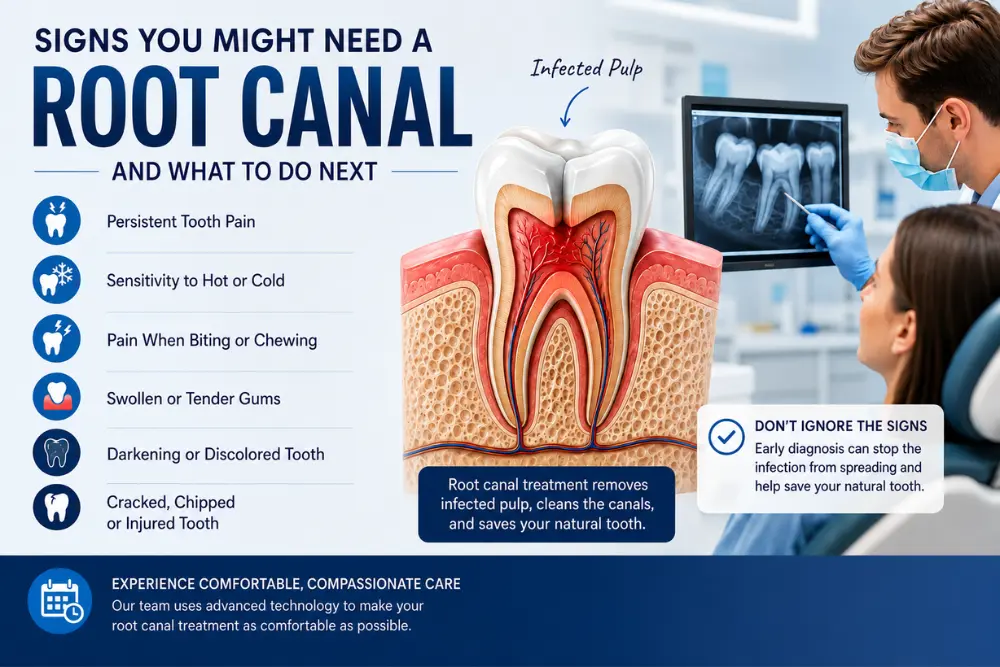
Persistent tooth pain, lingering sensitivity to hot or cold, pain when chewing, swelling, or a darkening tooth can all be signs that something is wrong inside the tooth. In some cases, these symptoms may mean the pulp has become inflamed or infected and root canal treatment is needed.
But symptoms alone cannot tell you whether you need a root canal. Similar signs can occur with cavities, cracked teeth, gum problems, or other dental conditions. A dental examination and, when appropriate, X-rays can help determine what is causing the problem and which treatment is right for you.
At Essentials Dental, our team provides root canal therapy and endodontic care with a focus on patient comfort, precise diagnosis, and preserving natural teeth whenever possible.
How Do You Know If You Need a Root Canal?
You may need a root canal if you have persistent tooth pain, sensitivity that continues after hot or cold exposure, pain when biting, swelling around a tooth, or other signs of infection.
These symptoms do not automatically mean you need a root canal. Your dentist needs to determine whether the tooth’s pulp is inflamed or infected and whether the tooth can be treated and restored.
Some of the most common warning signs include:
- Persistent or worsening tooth pain
- Lingering sensitivity to hot or cold
- Pain when biting or chewing
- Swollen or tender gums near a tooth
- A recurring bump on the gums
- Tooth discoloration
- A cracked, chipped, or previously injured tooth
Signs You Might Need a Root Canal
1. Persistent Tooth Pain
A toothache that keeps returning or does not improve deserves attention.
You may notice:
- A deep or throbbing ache
- Pain when chewing or applying pressure
- Pain that appears without an obvious trigger
- Pain that spreads toward the jaw or surrounding area
- Discomfort that interferes with eating or sleeping
Persistent pain can have several causes, including deep decay, inflammation, infection, or a damaged tooth. It is not possible to identify the cause based on pain alone.
If your tooth continues to hurt, scheduling an examination is a better option than waiting for the pain to disappear.
2. Sensitivity to Hot or Cold That Lingers
Many people experience brief sensitivity when eating something very cold or drinking something hot. What can be more concerning is pain that continues after the food or drink is gone.
For example, you may notice that a tooth continues to ache after drinking hot coffee or eating ice cream.
Lingering sensitivity can indicate that the pulp inside the tooth is significantly inflamed or damaged. Your dentist can perform the appropriate tests to determine whether the pulp can recover or whether root canal treatment may be necessary.
3. Pain When Biting or Chewing
Pain when putting pressure on a tooth is another reason to have it examined.
It may be associated with inflammation inside the tooth, inflammation around the root, a crack, or another dental problem.
Because several conditions can cause pain when chewing, this symptom should not automatically be treated as proof that you need a root canal. Your dentist can identify the underlying problem and recommend the appropriate treatment.
4. Swollen or Tender Gums
Swelling around one particular tooth can be a sign of inflammation or infection.
You might notice:
- A swollen area on the gum
- Tenderness when touching the gum
- Redness around the tooth
- A small pimple-like bump
- A bad taste if an infection begins to drain
An abscess or dental infection should be evaluated promptly. Essentials Dental provides emergency root canal care for patients experiencing severe tooth pain or swelling in the Glendale Heights area.
5. A Darkening or Discolored Tooth
If one tooth becomes noticeably darker than the teeth around it, it may indicate damage to the pulp.
Tooth discoloration can also have other causes, including staining or previous dental treatment. However, a noticeable change in one tooth, especially when combined with pain, sensitivity, or swelling, should be evaluated by a dentist.
6. A Cracked, Chipped, or Injured Tooth
A damaged tooth can allow bacteria to reach the inner pulp.
A tooth may become damaged because of:
- An accident or sports injury
- Biting down on something hard
- Teeth grinding
- Deep decay
- Large or older restorations
Not every cracked tooth needs a root canal. The location and severity of the damage determine whether the pulp has been affected and whether the tooth can be restored.
What Causes a Tooth to Need a Root Canal?
Root canal treatment may be necessary when the pulp inside a tooth becomes infected or severely inflamed.
The pulp contains nerves and blood vessels. When bacteria or trauma damage this inner tissue, the pulp may become unable to recover.
Common causes include:
Deep Tooth Decay
When a cavity progresses deep into the tooth, bacteria can eventually reach the pulp. Treating decay earlier can help prevent it from progressing to this stage.
Cracks or Fractures
A crack can create a pathway for bacteria to reach the inside of the tooth. Some cracks are easy to see, while others may be difficult to identify without a dental examination.
Dental Trauma
An injury can damage the pulp even if the tooth does not immediately look severely damaged. Symptoms may appear immediately or develop later.
Repeated Dental Treatment
A tooth that has received multiple procedures may become more susceptible to pulp irritation or other complications.
What Is Root Canal Treatment?
Root canal treatment is a procedure that removes infected or damaged pulp from inside a tooth, cleans and disinfects the root canals, and then fills and seals the space.
The purpose is to eliminate the source of infection while preserving the natural tooth whenever it can be restored.
Essentials Dental describes root canal therapy as a treatment designed to address infection or inflammation of the pulp and help patients retain their natural teeth.
What Happens During a Root Canal Procedure?
A root canal procedure generally involves several steps.
Examination and X-Rays
Your dentist first evaluates your symptoms and examines the affected tooth. X-rays can help identify the number of roots and canals and reveal changes around the tooth.
Numbing the Tooth
Local anesthesia is used to numb the treatment area before the procedure begins.
Cleaning the Root Canals
The dentist accesses the inside of the tooth and removes the infected or damaged pulp. The canals are then cleaned and disinfected.
Filling and Sealing
After the canals have been cleaned, they are filled with a dental material and sealed to help prevent bacteria from entering the treated space again.
Restoring the Tooth
The tooth is then restored with an appropriate filling, crown, or other restoration depending on its condition.
Essentials Dental uses digital imaging and rotary instruments as part of its root canal treatment approach.
What Is Root Filling?
Root filling is the process of filling the cleaned root canals after the affected pulp has been removed.
The filling material helps seal the canals and prevent bacteria from entering the treated space. Root filling is an important part of the root canal procedure because cleaning the canals alone does not complete the treatment.
After the root canals have been filled and sealed, the tooth may need a permanent restoration to protect its remaining structure.
How Long Does a Root Canal Take?
The time required for a root canal depends on the tooth and the complexity of the treatment. Some cases can be completed during one appointment, while more complex cases may require additional visits.
Factors that can affect treatment time include:
- The location of the tooth
- The number of roots and canals
- The shape of the canals
- The severity of the infection
- Whether the tooth has been treated previously
- The type of restoration needed afterward
Essentials Dental notes that many root canal treatments can be completed in a single visit, while some molar and more complex cases may require additional treatment.
Your dentist can provide a more specific estimate after examining your tooth.
Does a Root Canal Hurt?
Modern root canal treatment is performed using local anesthesia to numb the affected area.
At Essentials Dental, patient comfort is a central part of its root canal approach, with modern anesthesia and dental technology used to make treatment as comfortable as possible.
Some tenderness can occur after treatment. If you experience discomfort that becomes worse instead of improving, contact your dentist for advice.
What Happens After Root Canal Treatment?
Your tooth may feel tender after treatment, particularly when biting or putting pressure on it. This usually improves as the surrounding tissues settle.
Your dentist may recommend:
- Following your specific aftercare instructions
- Avoiding unnecessary pressure on the treated tooth until it is restored
- Attending a follow-up appointment when recommended
- Completing the permanent restoration on schedule
Essentials Dental’s root canal recovery guidance notes that mild soreness can occur after treatment and emphasizes completing the recommended restoration and follow-up care.
Does Every Root Canal Need a Crown?
Not every root canal automatically requires a crown.
The appropriate restoration depends on the tooth, how much natural tooth structure remains, the extent of damage, and the amount of pressure the tooth experiences during normal chewing.
Essentials Dental notes that a crown is commonly recommended after root canal treatment to help protect the treated tooth, although your dentist will determine the appropriate restoration for your specific case.
Can a Tooth Heal Without a Root Canal?
Not every tooth with pain or sensitivity needs a root canal.
Some dental problems can be treated with less extensive procedures, particularly when the pulp has not suffered irreversible damage.
However, if the pulp is infected or irreversibly damaged, it generally requires professional treatment. Depending on the condition of the tooth, treatment may involve root canal therapy, another restorative procedure, or extraction.
That is why an examination is important before deciding whether you need a root canal.
Root Canal vs. Tooth Extraction
If a tooth is badly damaged or infected, your dentist may discuss root canal treatment and extraction as possible options.
| Root Canal Treatment | Tooth Extraction |
| Treats the inside of the natural tooth | Removes the affected tooth |
| Aims to preserve the natural tooth | Creates a space that may need replacement |
| The tooth can be restored after treatment | A bridge, implant, or other replacement may be considered |
| Removes infected pulp while retaining the tooth | Removes the source of infection by removing the tooth |
When a tooth can be predictably restored, preserving the natural tooth may be an option. If the tooth is too damaged to restore, extraction may be recommended.
The right choice depends on the condition of the tooth and your dentist’s evaluation. Essentials Dental also provides extraction and restorative services when a tooth cannot be saved.
What Happens If You Delay Needed Root Canal Treatment?
If a tooth has an infection that requires treatment, delaying care can allow the problem to progress.
The infection may extend beyond the pulp and affect the tissues around the tooth. A dental abscess can develop, and a tooth that might have been treatable may become more difficult to restore.
However, pain disappearing does not necessarily mean the infection is gone. If you previously had significant tooth pain and it suddenly stopped, you should still have the tooth evaluated.
The earlier the underlying problem is identified, the more options your dentist may have for treating and preserving the tooth.
When Should You See a Dentist?
You should schedule a dental examination if you have:
- Tooth pain that persists or keeps returning
- Sensitivity that lingers after hot or cold exposure
- Pain when biting or chewing
- Swelling around a tooth
- A recurring bump on the gum
- A noticeably darker tooth
- A cracked or injured tooth
You do not need to wait until the pain becomes severe. A dental examination can determine whether the problem is related to the pulp or another part of the tooth.
When Is a Tooth Problem an Emergency?
Significant facial or mouth swelling, difficulty swallowing, difficulty breathing, or rapidly worsening symptoms require urgent professional attention.
If you are experiencing severe tooth pain or swelling, Essentials Dental offers emergency dental care, including emergency root canal treatment in Glendale Heights.
Frequently Asked Questions About Root Canals
How do you know if you need a root canal?
Persistent tooth pain, lingering hot or cold sensitivity, pain when biting, swelling, or tooth discoloration can be signs of a problem involving the pulp. These symptoms do not confirm that you need a root canal, so a dentist should examine the tooth and determine the cause.
Does a tooth always hurt when it needs a root canal?
No. A tooth that requires root canal treatment may sometimes have little or no pain. A damaged or non-vital pulp can still be associated with infection, swelling, discoloration, or other changes that require dental evaluation.
How long does a root canal take?
Treatment time varies depending on the tooth and the complexity of the case. Many treatments can be completed in one appointment, while more complex teeth may require additional visits. Your dentist can estimate the treatment time after examining the tooth.
What is root filling?
Root filling involves filling the cleaned root canals after the damaged or infected pulp has been removed. It helps seal the canals and reduce the opportunity for bacteria to enter the treated space again.
Is root canal treatment painful?
The tooth is numbed with local anesthesia before treatment. Essentials Dental uses modern anesthesia and technology with a focus on making root canal treatment as comfortable as possible.
What happens if you do not get a root canal?
If a tooth has an infection or irreversible pulp damage that requires treatment, leaving it untreated can allow the problem to progress. The infection may spread to surrounding tissues, and the tooth may eventually become difficult or impossible to save.
Can a dentist tell if I need a root canal?
Yes. A dentist can evaluate your symptoms, examine the tooth, perform appropriate tests, and use dental X-rays when necessary. These findings help determine whether root canal treatment or another option is appropriate.
Can I get root canal treatment at Essentials Dental?
Yes. Essentials Dental provides root canal therapy and endodontic treatment in Glendale Heights and serves patients from nearby communities, including Bloomingdale. The practice focuses on comfortable treatment, precise diagnosis, and preserving natural teeth when possible.
What to Do If You Think You Need a Root Canal
If you are experiencing persistent tooth pain, lingering sensitivity, pain when chewing, swelling, or another concerning symptom, schedule a dental examination rather than trying to diagnose the problem yourself.
At Essentials Dental, the team can evaluate your tooth, explain what is causing your symptoms, and discuss the appropriate treatment options. Root canal therapy is designed to treat problems inside the tooth while preserving the natural tooth whenever possible.
Essentials Dental has offices serving patients in Glendale Heights, with a comfort-focused approach to dental care.
If you think you may need a root canal, schedule an examination with Essentials Dental to find out what is happening and what treatment your tooth needs.


