

Most dental problems don’t start as emergencies. A small cavity, a spot of early gum inflammation, a hairline crack in a molar, all of these are manageable when caught early and expensive or painful when they’re not. Preventive dentistry is built around that gap. It’s the difference between catching a problem while it’s still small and finding out about it only once it’s already cost you a tooth.
At Essentials Dental, preventive care isn’t treated as a routine add-on to “real” dentistry. It’s the foundation everything else is built on.
What is preventive dental care?
Preventive dental care covers the routine exams, cleanings, and early interventions designed to stop problems before they start, or catch them while they’re still small and simple to treat. That includes regular checkups, professional cleanings, X-rays, fluoride treatments, sealants, and the guidance your dentist gives you on brushing, flossing, and diet.
It’s different from restorative dentistry, which repairs damage that’s already happened: a filling, a crown, a root canal. Preventive care exists to reduce how often you need restorative care in the first place.
Why does the importance of preventive dental care keep coming up
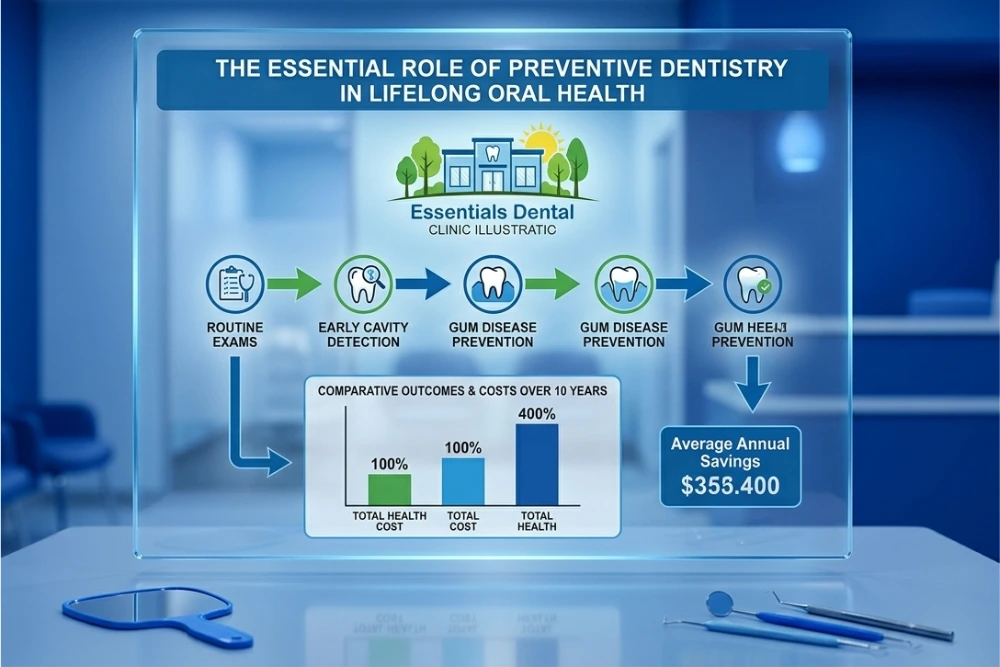
The case for prevention isn’t just a talking point dentists repeat. It shows up clearly in the data. Research on dental spending has found that every dollar spent on preventive dental care can save between $8 and $50 in restorative and emergency treatment down the line. That’s not a small margin. It’s the difference between a routine cleaning and a root canal, or between a sealant and a crown.
The reasoning is straightforward. Tooth decay and gum disease both progress slowly and quietly at first. A cavity that could be treated with a simple filling today can turn into a root canal or extraction a year or two later if it’s left alone. Preventive visits are built around catching that window while the fix is still small.
There’s also a health connection that goes beyond the mouth. Poor oral health has been linked to a higher risk of conditions like cardiovascular disease and diabetes, and dental visits sometimes catch early signs of health issues that have nothing to do with teeth, like nutritional deficiencies or oral changes worth flagging to a physician.
Preventative dental care benefits at every age
Prevention isn’t a single treatment. It’s a set of habits and checkpoints that change slightly as you age, but the underlying logic stays the same throughout life.
Children. Preventive care in childhood sets the pattern for a lifetime of oral health. Sealants applied to the chewing surfaces of back teeth have been shown to prevent a large share of cavities in the teeth they cover, and fluoride treatments strengthen enamel while it’s still developing. Catching orthodontic or bite issues early can also mean simpler treatment later.
Teens and adults. Routine cleanings and checkups catch the early stages of decay and gum disease before symptoms even appear. This is also the stage where habits like grinding, poor brushing technique, or diet-related enamel wear tend to show up, and a dentist can flag them well before they cause real damage.
Older adults. Gum health becomes a bigger factor with age, and existing dental work, fillings, crowns, and bridges, need regular monitoring to make sure it’s still doing their job. Preventive visits at this stage are as much about protecting long-term investments in your mouth as they are about catching new problems.
Adult oral health preventive care looks different from what most people expect.
A lot of adults assume preventive dentistry is mostly for kids, since sealants and fluoride treatments get so much attention in pediatric care. That’s not accurate. Adult oral health preventive care is just as structured; it’s built around different risks.
Gum disease is the biggest one. It develops gradually, often without pain in its early stages, and it’s a leading cause of tooth loss in adults. Regular cleanings and periodontal monitoring catch it while it’s still reversible.
Wear and damage from grinding, clenching, or years of chewing also become more relevant with age, along with monitoring older dental work for signs that it needs attention. And adults are more likely to be managing other health conditions, diabetes, heart disease, pregnancy, that interact with oral health in ways children’s dental visits don’t need to account for. A good adult preventive plan looks at all of that together, not just the teeth in isolation.
What preventive and comprehensive dental services actually include
“Preventive and comprehensive dental services” sounds like a broad phrase, and it is, deliberately. It covers the full range of factors that keep a mouth healthy over time, not just the basics.
A comprehensive preventive plan typically includes routine exams and professional cleanings, usually every six months for most patients, though your dentist may recommend a different interval based on your risk factors. It includes diagnostic X-rays to catch decay and other issues between teeth or below the gumline that aren’t visible during a standard exam. Fluoride treatments and sealants add an extra layer of protection where it’s most needed. Periodontal screening tracks gum health over time rather than just reacting once a problem is obvious. Oral cancer screening, done as part of a routine exam, catches one of the areas where early detection makes the biggest difference in outcome.
Beyond the clinical side, comprehensive preventive care also means education, real guidance on brushing technique, flossing, diet, and habits like grinding, tailored to what your mouth actually needs rather than generic advice.
What a preventive care visit actually looks like
A typical preventive visit starts with a cleaning, removing plaque and tartar buildup that brushing and flossing can’t fully reach on their own. Your dentist or hygienist will also check for early signs of decay, gum inflammation, or other changes since your last visit.
X-rays are usually taken on a set schedule, not every visit, to track changes below the surface. Your dentist will review those alongside a visual exam, and if something needs attention, you’ll hear about it while it’s still a minor fix rather than after it’s become a bigger one.
Most visits end with a conversation. What’s working in your home care routine, what could improve, and what to expect before your next visit. This is also where technology plays a bigger role than it used to. We use advanced technology to catch issues earlier and more precisely than a visual exam alone would allow.
Why skipping preventive visits costs more than it saves
It’s easy to think of a dental visit as an expense you can put off, especially when nothing hurts. But the data on this is consistent. Adults who skip regular preventive visits tend to need more extractions and more extensive treatment later, and the cost of catching a problem late is almost always higher than the cost of catching it early.
Pain is usually the last symptom to show up, not the first. Decay and gum disease can both progress significantly before you feel anything, which is exactly why the checkups matter even when everything seems fine.
Building a preventive care routine that works
Good preventive care isn’t only what happens in the dental chair. It’s a combination of what you do daily and what your dentist checks periodically.
At home, that means brushing twice a day, flossing daily, and paying attention to diet, since sugar and acidic foods are two of the biggest drivers of decay. At the practice, it means keeping to the exam and cleaning schedule your dentist recommends, rather than only coming in once something feels wrong.
Your specific schedule may not match the generic six-month guideline. Some patients need more frequent visits based on their history with gum disease, decay, or other risk factors, and some need less. That’s part of what a first visit is for: building a plan around your actual mouth rather than a one-size-fits-all interval.
Getting started with preventive care
If it’s been a while since your last checkup, or you’re looking for a dental home that treats prevention as seriously as it treats problems once they’ve already happened, that’s exactly what a preventive-focused practice is built for.
Meet our team to see who you’ll be working with, then book an appointment to get started. If you have questions before scheduling, contact our office, and we’re glad to help.
Frequently asked questions
How often should I go in for preventive dental care?
Most adults do well with a checkup and cleaning every six months, though your dentist may recommend a different schedule based on your gum health, cavity history, and other risk factors. Some patients benefit from more frequent visits, others from less.
Is preventive dental care covered by insurance?
Most dental insurance plans cover preventive care, exams, cleanings, and routine X-rays, at little to no out-of-pocket cost, since insurers benefit from the same cost savings that make prevention worthwhile in the first place. Coverage details vary by plan, so it’s worth checking your specific benefits.
What happens if I skip my regular cleanings?
Plaque and tartar build up in places brushing and flossing can’t fully reach, which raises your risk of cavities and gum disease over time. Problems that would have been minor at a routine visit can become more serious and more expensive the longer they go unaddressed.
Do adults really need preventive care, or is it mostly for kids?
Adults need it just as much, if not more. Gum disease, wear from grinding, and the long-term monitoring of existing dental work are all adult-specific concerns that preventive visits are built to catch.
What’s the difference between preventive and restorative dentistry?
Preventive dentistry aims to stop problems before they happen or catch them while they’re still minor. Restorative dentistry repairs damage that’s already occurred, such as fillings, crowns, and root canals. The goal of good preventive care is to need less restorative work over time.


