

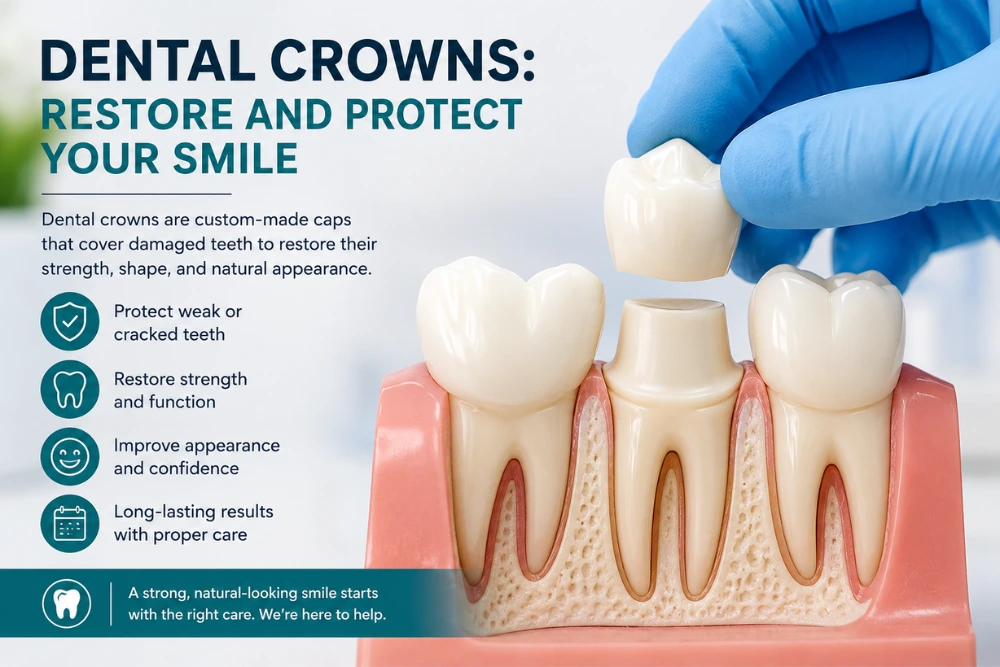
A dental crown is a custom cap that covers a damaged tooth to restore its shape, strength, and appearance. It protects a weak or cracked tooth from breaking, rebuilds one that is worn or broken down, and lets you bite and smile with confidence again.
Overview
This guide explains what a dental crown is, the benefits it offers, when a dentist recommends one, and how to care for it. It is written for patients of Essentials Dental weighing whether a crown is the right way to restore a tooth.
Key takeaways
- A crown caps a whole tooth to restore its shape, size, strength, and look.
- It protects weak, cracked, or heavily filled teeth from further damage.
- Crowns often finish a root canal, cover a large filling, or top a dental implant.
- They restore normal chewing and speaking while blending in with your natural teeth.
- With good care, a well-made crown protects the tooth for many years.
When a tooth is too damaged for a simple filling but still worth saving, a crown is often the answer. Think of it as a tailored helmet for a tooth, one that wraps the whole visible surface, holds the tooth together, and gives you back a surface you can bite on without a second thought.
Whether a tooth has cracked, worn down, or just come through a root canal, a crown restores both how it works and how it looks.
What is a dental crown?
A dental crown is a cap shaped to fit over an entire tooth, right down to the gumline. Once it is bonded in place, it becomes the new outer surface of the tooth, taking on the shape, size, and color of the original. Crowns are made from materials such as porcelain, ceramic, porcelain fused to metal, and zirconia, each with its own balance of strength and natural appearance. Your dentist matches the material to the tooth, so a crown on a front tooth prioritizes a lifelike look while one on a back molar leans on durability for heavy chewing.
Why would you need a crown?
A crown does more than cover a tooth. It solves problems a filling cannot. A dentist at Essentials Dental may recommend one to:
- Protect a weak or cracked tooth from breaking apart under the pressure of chewing.
- Rebuild a tooth that is badly worn, broken, or too decayed for a filling to hold.
- Cover and support a tooth with a very large filling and little healthy structure left.
- Seal and strengthen a tooth after a root canal, which can become brittle without one.
- Top a dental implant, completing the replacement of a missing tooth.
- Improve a tooth that is discolored or misshapen, restoring an even smile.
What are the benefits of a dental crown?
The appeal of a crown is that it restores strength, function, and appearance all at once.
Strength comes first. By wrapping the whole tooth, a crown holds a cracked or weakened one together and shields it from the forces that would otherwise finish the job. Function follows. A restored tooth lets you chew and speak normally again, without favoring one side of your mouth or avoiding certain foods.
Appearance rounds it out. A well-matched crown blends with the teeth around it, so the repair is nobody’s business but yours. And because a crown seals the tooth beneath it, it also helps keep further decay from taking hold.
How long do dental crowns last?
A crown is a long-term restoration, not a temporary patch. With everyday care, a well-fitted crown protects its tooth for many years, often far longer. What shortens its life is neglect rather than age.
Grinding, chewing ice or hard candy, and skipping checkups all take a toll. Treat a crown like a natural tooth, and it tends to reward you by lasting.
How do you care for a crown?
Caring for a crown is refreshingly ordinary. Brush twice a day, floss around it to keep the gumline clean, and keep up with regular dental visits so your dentist can check the fit and the tooth underneath.
Ease off hard foods and habits like chewing pens or ice, and if you grind your teeth at night, ask about a nightguard. The crown itself will not decay, but the natural tooth beneath its edge still can, which is why the everyday basics matter.
The Glendale Heights Solution to Saving a Tooth Instead of Pulling It
Once a tooth cracks or wears down past what a filling can hold, a crown becomes the more reliable option. It covers the whole tooth down to the gumline, rebuilding the structure and taking the pressure of daily chewing off a weak spot. Glendale Heights patients see this most often after a root canal, when the tooth is structurally sound but brittle, or on a molar that’s been patched one too many times. A well-fitted crown, made from porcelain or zirconia depending on the tooth’s job, blends into the smile and holds up for years with normal brushing and flossing. The alternative, pulling the tooth, opens a longer road involving bridges or implants. Most patients would rather keep what they have.
Are crowns worth it?
For a tooth that would otherwise crack, wear away, or need pulling, a crown is often the most sensible investment you can make in your smile. It saves the tooth, restores full use of it, and looks natural doing so.
Cost is a fair question, and the honest answer is that it depends on the tooth, the material, and your own situation, which is a conversation worth having with your dentist rather than a number pulled from a page.
A crown restores a damaged tooth to full working order and protects it for the long haul. If a tooth of yours is cracked, worn, or freshly treated, it may be exactly what keeps it in your smile.
Restore your smile with a crown.
Essentials Dental offers custom dental crown services designed to protect your tooth and match your smile. Meet our team or reach out to find out whether a crown is right for you.
Frequently asked questions
What is a dental crown?
A crown is a custom cap that covers an entire tooth to restore its shape, size, strength, and appearance. Once bonded in place, it becomes the tooth’s new outer surface.
What are the benefits of a dental crown?
It strengthens and protects a damaged tooth, restores normal chewing and speaking, blends in with your natural teeth, and seals the tooth against further decay.
When do you need a crown instead of a filling?
When too few healthy teeth remain for a filling to hold, or when a tooth is cracked, badly worn, or has had a root canal. A crown covers and supports the whole tooth rather than filling a small area.
Do dental crowns look natural?
Yes. Porcelain and ceramic crowns are matched to the color of your surrounding teeth, so a well-made crown is difficult to tell apart from a natural tooth.
How should I care for a dental crown?
Brush and floss as usual, keep up with dental checkups, and avoid chewing very hard foods or grinding. The tooth beneath the crown can still decay, so the gumline needs the same attention as any other tooth.


