

Some soreness, swelling, or discomfort is common after dental implant surgery as your mouth begins to heal. The intensity and duration of discomfort can vary depending on the procedure, the number of implants, and your individual recovery.
Knowing what to expect and following your dentist’s aftercare instructions can make the recovery process easier. From protecting the surgical site to choosing suitable foods and maintaining oral hygiene, a few practical steps can support healing and help you manage discomfort.
If pain becomes severe, gets worse instead of better, or is accompanied by significant swelling, fever, pus, or other concerning symptoms, contact your dentist promptly.
Is Pain After a Dental Implant Normal?
Some pain after a dental implant procedure is expected. The surgical site may feel tender once the local anesthetic wears off, and mild swelling or bruising can also occur.
Discomfort should generally improve as healing progresses. Your dentist will give you specific instructions based on your procedure, so follow those recommendations rather than comparing your recovery with someone else’s.
The type and extent of discomfort can depend on factors such as:
- The number of implants placed
- The location of the implant
- Whether bone grafting was performed
- The complexity of the procedure
- Your individual healing response
How to Relieve Pain From a Dental Implant
The best way to manage pain after a dental implant is to follow the instructions provided by your dental team. Depending on your treatment, your dentist may recommend medication, cold compresses, dietary changes, and other measures.
1. Follow Your Dentist’s Medication Instructions
If your dentist recommends a pain reliever or other medication, take it exactly as directed.
Do not take more than the recommended amount or combine medications unless your dentist or another healthcare professional has confirmed that doing so is appropriate for you.
If you have questions about a medication, ask your dental team before taking it.
2. Use a Cold Compress
A cold compress can help reduce swelling and make the area feel more comfortable during the early part of recovery.
Place the cold compress against the outside of your cheek for short periods, following your dentist’s instructions. Avoid placing ice directly against your skin.
Cold therapy is generally most useful during the early stage of recovery, when swelling is more noticeable.
3. Choose Soft Foods
Your mouth may be sensitive after implant surgery, making softer foods easier to eat.
Depending on your dentist’s recommendations, suitable options may include:
- Yogurt
- Mashed potatoes
- Eggs
- Smooth soups that are not hot
- Soft pasta
- Applesauce
- Smoothies eaten without a straw
Avoid foods that are hard, crunchy, sticky, or difficult to chew while the surgical area is healing.
Your dentist can tell you when it is appropriate to return to your normal diet.
4. Avoid Smoking and Tobacco
Smoking can interfere with healing and increase the risk of complications after oral surgery.
If you smoke or use tobacco products, talk with your dentist about how to protect your recovery. Avoiding tobacco during healing can support the health of the tissues surrounding the implant.
5. Keep the Surgical Area Clean
Good oral hygiene remains important after implant surgery, but the surgical site needs to be treated carefully.
Follow your dentist’s instructions about brushing, rinsing, and cleaning around the implant. Avoid aggressively brushing or disturbing the surgical area while it heals.
Your dental team may recommend a specific rinsing routine depending on your procedure.
6. Rest and Avoid Strenuous Activity Initially
Giving your body time to recover can help you feel more comfortable after surgery.
Your dentist may recommend limiting strenuous exercise or activities for a short period after the procedure. Follow the recovery instructions provided by your dental team, especially during the first stage of healing.
7. Keep Your Head Elevated When Resting
If your dentist recommends it, keeping your head slightly elevated while resting may help with swelling and discomfort.
A comfortable sleeping position can also help you avoid accidentally putting pressure on the surgical area.
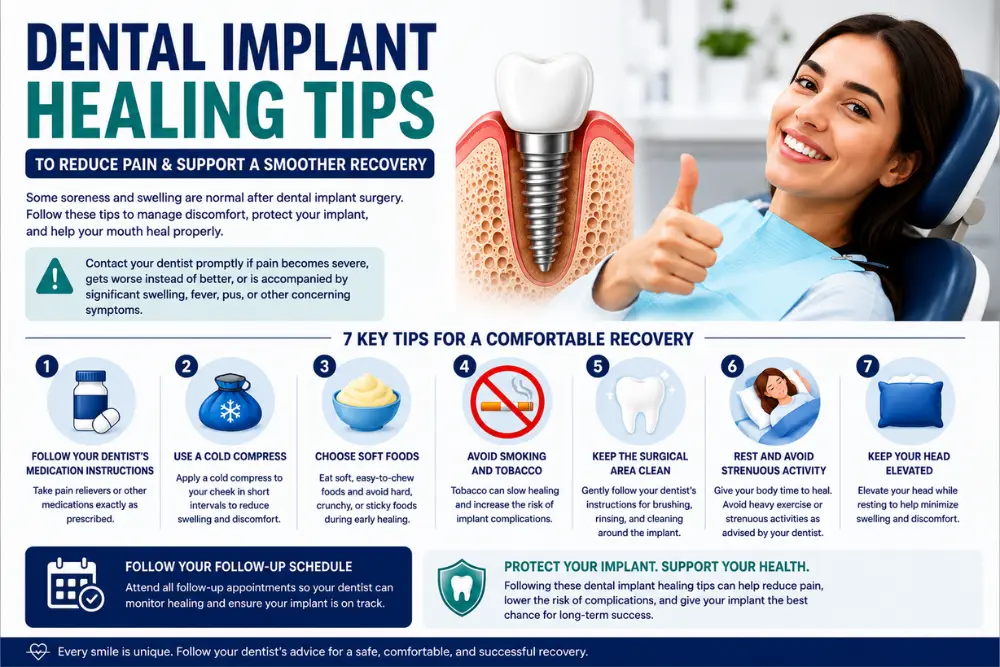
Dental Implant Healing Tips for a Smoother Recovery
Pain management is only one part of implant recovery. Protecting the surgical site and following your aftercare instructions can also support the healing process.
Do Not Disturb the Surgical Site
Avoid touching the area unnecessarily with your fingers or tongue. If a blood clot or healing tissue is disturbed, it can interfere with normal recovery.
Avoid Straws Unless Your Dentist Says Otherwise
Suction can place unnecessary stress on healing tissues after certain oral procedures. Ask your dentist when it is safe to resume using straws.
Follow Your Follow-Up Schedule
Your dentist needs to monitor how the implant and surrounding tissues are healing.
Follow-up visits allow your dental team to check the surgical site, evaluate your recovery, and address concerns before they become more serious.
Follow the Full Treatment Plan
Dental implant treatment can involve several stages, including implant placement and restoration. Healing beneath the gums can continue even after the initial soreness has improved.
Following your dentist’s complete treatment plan is important for the long-term health of your implant.
How Long Does Dental Implant Pain Last?
There is no single recovery timeline that applies to everyone.
Many patients experience the most noticeable discomfort during the early part of recovery, followed by gradual improvement. The amount of pain can depend on the complexity of the procedure and whether additional treatments, such as bone grafting, were performed.
Your dentist can give you a more personalized expectation based on your procedure.
The important thing to watch is the overall trend.
Pain that gradually improves is generally less concerning than pain that becomes increasingly severe after initially improving.
What About Throbbing Pain After a Dental Implant?
Some throbbing or pulsating discomfort can occur during the early healing period. However, severe or worsening throbbing pain after a dental implant should be evaluated by your dentist, particularly if it occurs with other symptoms.
Contact your dental office if you notice:
- Pain that becomes significantly worse
- Increasing swelling
- Fever
- Pus or drainage
- A persistent bad taste or odor
- Significant bleeding
- Difficulty opening your mouth
- A loose implant or unusual movement
- Numbness that does not improve as expected
These symptoms do not necessarily mean that a complication has occurred, but they warrant professional evaluation.
When Should You Call Your Dentist About Implant Pain?
Call your dentist if your pain is severe, continues to increase, or does not appear to be following the recovery pattern your dental team described.
You should also contact your dental office if you develop significant swelling, fever, unusual drainage, persistent bleeding, or other symptoms that concern you.
If you have difficulty breathing or swallowing or develop rapidly increasing facial swelling, seek urgent medical attention.
What Should You Avoid During Dental Implant Recovery?
Protecting the surgical area can be just as important as managing discomfort.
During the early recovery period, your dentist may recommend avoiding:
- Smoking or tobacco
- Alcohol
- Hard or crunchy foods
- Very hot foods and drinks
- Strenuous activity
- Touching or disturbing the surgical area
- Using straws
- Aggressive brushing around the implant
Your exact restrictions will depend on the type of implant procedure you received.
Can I Brush My Teeth After Dental Implant Surgery?
In most cases, maintaining oral hygiene remains important after implant surgery, but you may need to modify how you clean around the surgical site.
Follow your dentist’s specific instructions about when and how to brush near the implant. Avoid scrubbing the surgical area unless your dental team tells you it is safe.
Keeping the rest of your mouth clean can help support overall oral health during recovery.
Dental Implant Recovery Tips: What to Remember
A comfortable recovery starts with protecting the surgical site and following your dentist’s instructions.
The most important dental implant recovery tips include:
- Take recommended medication exactly as directed.
- Use a cold compress when advised.
- Choose soft foods while your mouth is tender.
- Avoid smoking and tobacco.
- Keep your mouth clean according to your dentist’s instructions.
- Avoid disturbing the surgical site.
- Attend recommended follow-up appointments.
- Contact your dentist if pain becomes severe or worsens.
Remember that implant healing continues beyond the period when initial soreness disappears. Your dental team will monitor the implant as it heals and integrates with the surrounding bone.
Frequently Asked Questions About Dental Implant Pain and Recovery
Is pain after a dental implant normal?
Some pain, tenderness, swelling, or discomfort can be normal after dental implant surgery. Symptoms should generally improve as healing progresses. Contact your dentist if pain becomes severe, worsens, or occurs with other concerning symptoms.
How can I relieve pain from a dental implant?
Follow your dentist’s aftercare instructions, use recommended pain medication as directed, apply a cold compress when advised, choose soft foods, and avoid activities that may disturb the surgical site. Your dentist can provide guidance specific to your procedure.
How long does pain after a dental implant last?
Recovery varies between patients and procedures. Discomfort is often more noticeable during the early healing period and should gradually improve. Your dentist can give you a more specific expectation based on the type and complexity of your implant procedure.
Is throbbing pain after a dental implant normal?
Some throbbing discomfort can occur during early healing, but severe or worsening throbbing pain should be checked by your dentist. Increasing pain accompanied by swelling, fever, drainage, or other unusual symptoms may require prompt evaluation.
What are the best dental implant healing tips?
Follow your dentist’s instructions, maintain appropriate oral hygiene, eat suitable foods, avoid smoking, protect the surgical site, rest as recommended, and attend follow-up appointments. Your recovery instructions may differ depending on your procedure.
Can I eat normally after dental implant surgery?
Your dentist may recommend soft foods during the early recovery period. Avoid hard, crunchy, sticky, or very hot foods until your dental team confirms that the surgical area is ready for them.
Can I brush my teeth after getting a dental implant?
Oral hygiene is important during recovery, but the surgical site may need special care. Follow your dentist’s instructions about brushing and cleaning around the implant rather than brushing directly over the surgical area without guidance.
When should I worry about pain after a dental implant?
Contact your dentist if pain becomes severe, gets worse instead of improving, or occurs with significant swelling, fever, pus, unusual bleeding, or other concerning symptoms. Prompt evaluation can help identify and address potential complications.
What to Do If Your Implant Pain Is Getting Worse
Some discomfort can be part of normal healing, but you should not ignore pain that is becoming more severe or is accompanied by unusual symptoms.
Concerned About Your Recovery?
If you are concerned about pain after a dental implant, contact your dental office and explain what you are experiencing. Your dentist can assess the surgical site, determine whether your recovery is progressing normally, and recommend the appropriate next step.
Essentials Dental also offers prompt evaluations for patients recovering from implant surgery in the Glendale Heights area.
Following your personalized aftercare instructions is the best way to support a smooth implant recovery and protect your long-term oral health.


